
- Home
- >
- Blog
- >
- Industry News
- >
- Electronic Drum Set Guide
Electronic Drum Set Guide
Electronic drums, blending traditional drumming with digital technology, redefine the boundaries of percussion instruments. Their versatility makes them suitable for everyone from beginners to professionals. This article will introduce you to electronic drums, answering key questions about their principles, advantages, and uses.
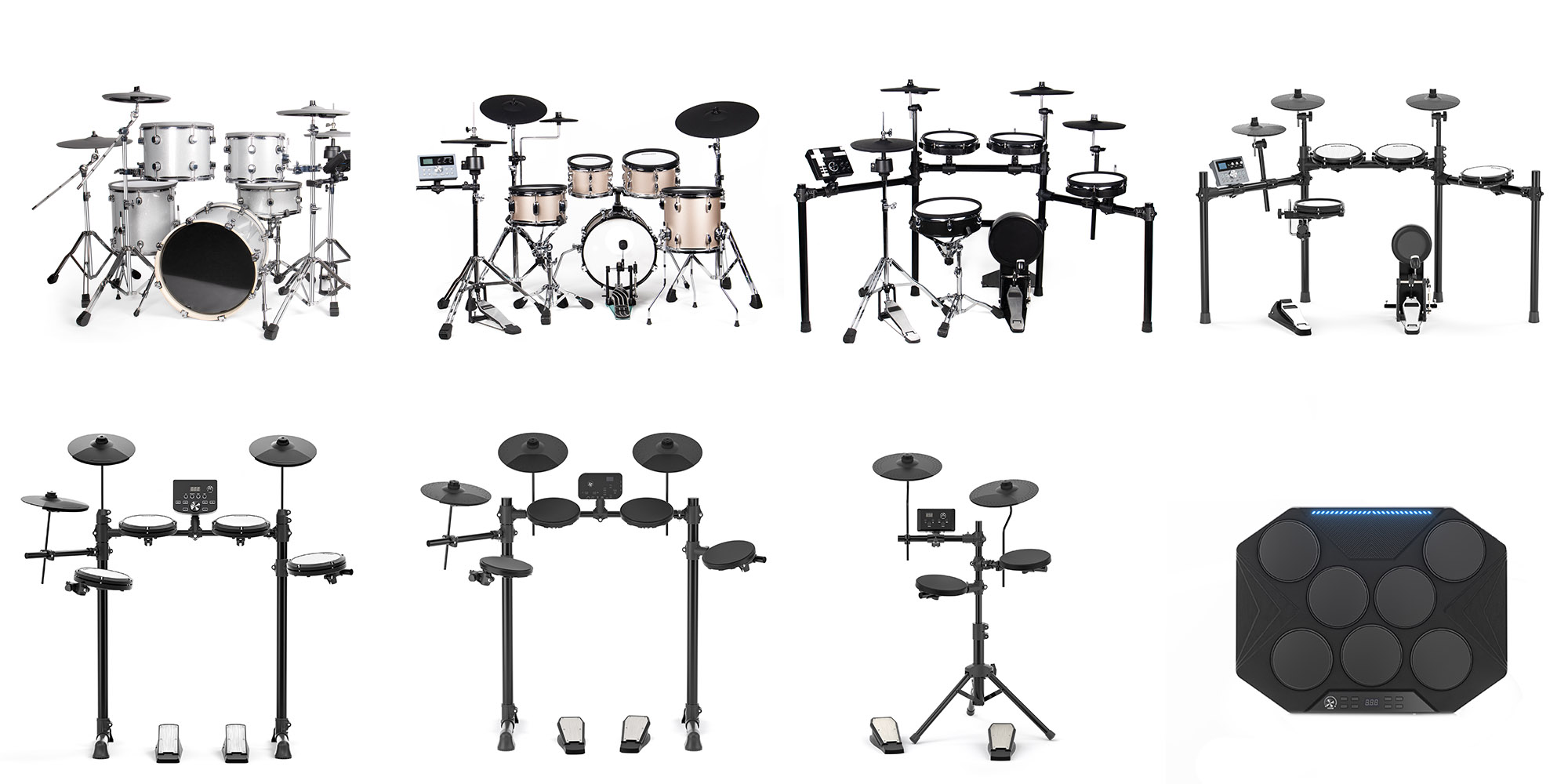
Q:What are electronic drums?
A:An electronic drum is a modern percussion instrument that produces sound electronically rather than acoustically. It consists of a drum pad, a sound module,and a pedal for
triggering the various sounds.
Q:How do electronic drums work?
A:Electronic drums work by using sensors in the pads (usually piezoelectric or pressure-sensitive) to detect strikes. These strikes trigger electronic sounds stored in the sound
module, which are then amplified and played through speakers or headphones.
Q:What are the advantages of electronic drums?
A:Electronic drums offer several advantages, including quieter practice, rich tones, compact size for easy storage, and the ability to practice quietly with headphones.
Q:Are electronic drums suitable for beginners?
A:Yes, electronic drums are suitable for beginners. They feature features like a built-in metronome, practice mode, and adjustable volume, making them ideal for learning and
practicing without disturbing others.
Q:Can electronic drums simulate the sound of acoustic drums?
A:Yes, electronic drums can simulate the sounds of a variety of acoustic drums, including different types of drums (snare, bass, toms, etc.), cymbals, and percussion instruments.
Many electronic drum modules offer high-quality acoustic drum samples.
Q:What are mesh drumheads on electronic drums?
A:Mesh drumheads are pads made of a flexible mesh material that provide a more realistic feel and response similar to acoustic drumheads. Mesh drumheads are popular among
drummers for their natural rebound and quiet operation.
Q:Can electronic drums be used for live performances?
A:Yes, electronic drums can be used for live performances. They offer flexible volume control, easy tonal variations, and can be integrated with other electronic instruments and audio
equipment on stage.
Q:How do I record electronic drums?
A:You can record electronic drums by connecting the module directly to a recording interface or mixer using an audio cable. Alternatively, you can use a MIDI connection to record MIDI
data and trigger virtual drum sounds in music production software.
Q:Do you offer custom electronic drum kits?
A:Yes, electronic drums can be customized to your personal preferences. Drummers can add additional pads, pedals, and accessories, and adjust settings such as sound presets,
sensitivity, and pad position.
Q:Are electronic drums durable?
A:Electronic drums are generally rugged and durable, able to withstand daily playing and transportation. However, like any musical instrument, proper care and maintenance are
essential to extending their lifespan.
Q:Can electronic drums be played without an amplifier?
A:Yes, electronic drums do not require an amplifier; simply plug headphones directly into the sound source and play. This allows for quiet practice or performance without disturbing others.
Q:How do electronic drums connect to a computer?
A:Electronic drums can be connected to a computer via USB or MIDI cables. This allows you to record MIDI data, trigger virtual instruments, or practice and play with drum software.
Q:What is the difference between MIDI and USB connections for electronic drums?
A:MIDI connections allow electronic drums to transmit musical data (such as note triggers and velocity) to other MIDI-compatible devices. USB connections can transmit both MIDI
data and audio signals, providing more versatility for recording and playback.
Q:Can electronic drums be used to learn drumming techniques?
A:Yes, electronic drums are an excellent tool for learning drumming. Many models come with built-in tutorials, exercises, and metronomes to help beginners effectively improve their skills.
Q:How do I set up my electronic drums?
A:Setting up an electronic drum set involves assembling the drum pads, mounting them on a stand or rack, connecting the cables, and adjusting the sound module settings. Most electronic
drums come with detailed setup instructions.
Q:Can electronic drums be used for silent practice?
A:Yes, electronic drums are ideal for silent practice. Drummers can use headphones to listen to the drums while playing, without any noise, making them perfect for practicing in apartments or
shared spaces.
Q:Are electronic drums suitable for children?
A:Yes, electronic drums are suitable for children, especially those who want to learn to play drums. Their adjustable volume, compact size, and built-in tutorial features make learning
drumming easy and fun.
Q:How do I care for my electronic drums?
A:Compared to acoustic drums, electronic drums are very low-maintenance. Regularly cleaning the pads and cymbals, checking the cables, and updating the sound module are essential to
maintain optimal performance and longevity.
Q:Can electronic drums be used for studio recording?
A:Yes, electronic drums are widely used in recording studios due to their versatility and ease of recording. They offer precise control over volume, tone, and effects, making them an
indispensable tool in the studio.
-
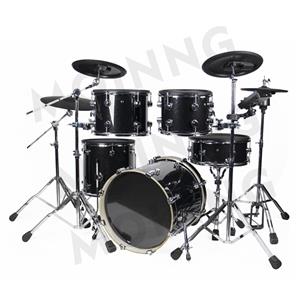
MOINNG electronic drums: Featuring an acoustic-like design, suitable for both stage and home use; Highly sensitive pads accurately capture subtle details from soft to powerful playing; Volume control makes them ideal for home and late-night practice; Retaining a classic layout while saving space, they meet the diverse needs of drummers from beginners to professionals.
-
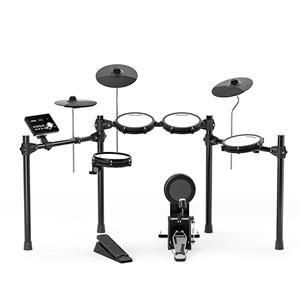
1. Quiet and non-disturbing, play anytime, anywhere 2. Professional-grade sound library, true drum feel restoration 3. Compact and portable design, flexible space adaptation 4. Professional-grade hardware, a powerful tool for stage and studio
-
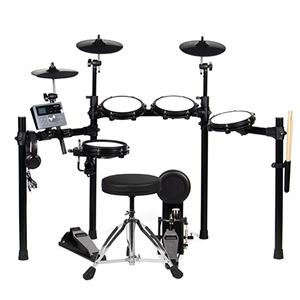
1.Innovative Sound & Realistic Feel 2.Versatile Sound Library 3.Adjustable Volume & Noise Control 4.Connectivity & MIDI Integration 5.User-Friendly & Customizable
-
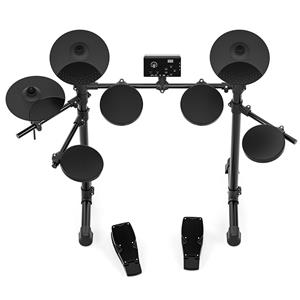
Small size and light weight No need to worry about taking up too much space Electronic drums are essential for beginners
| Phone : | +86-17859886020 |
|---|---|
| Fax : | +86-595-88011595 |
| Email : | info@moinng.com |